

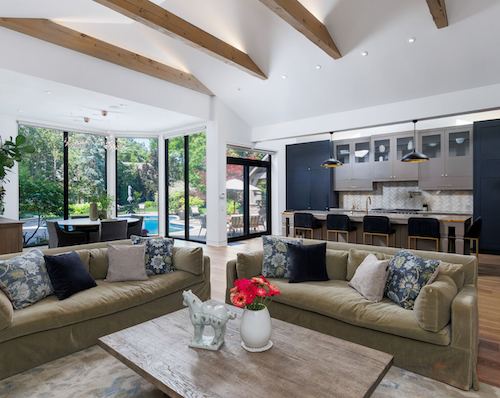
Buying real estate anywhere in Toronto could rightly be considered a luxury purchase. It isn’t just because of higher-than-average housing prices; it’s also the lifestyle!
Where else can you enjoy so many entertainment opportunities, a thriving job and business market, high-quality schools, and beautiful scenery all on the same block?
For the purposes of this post, we’ll consider a luxury purchase to mean anything that costs $1.5 million or more. That’s where the mortgage rules really start to change. Today, we’ll take a closer look at how to finance a high-end property.
Want to stay up to date with the latest in Toronto real estate? Get news about our latest listings and insights on the market by subscribing to our newsletter.
Low-Ratio Mortgages Only
For regular homes under $1.5 million, buyers can still apply for a mortgage even with less than a 20% down payment. This creates what is called a high-ratio mortgage, where the lender assumes more of a risk. Mortgage insurance is also required under Canadian regulations.
Since the rule is a government regulation rather than an independent policy set by the bank, there is a very hard cutoff as to when high-ratio mortgages are permitted.
- If your purchase price is $1,499,999, you can buy with $125,000 up front. (5% on the first $500,000 plus 10% on the remaining $999,999.)
- Once you pass the $1.5 million threshold, high-ratio mortgages are off the table. Even a single dollar makes a difference. The moment the price exceeds $1.5 million, you need the full 20%, which is $300,000 at least.
Looking for even more tips to buy your next property in Toronto? You’ll find plenty of insight in the posts below:
- What to Do Immediately After Getting Your New Home
- Steps to Buying a House for the First-Time in Canada
- Is it Better to Buy First or Sell First in Toronto?
Lending Guidelines Vary
Perhaps it seems counterintuitive, but guidelines can actually be more stringent for low-ratio mortgages. Look closer though, and it makes perfect sense considering the dollar amounts involved; plus, the bank is assuming more risk with no mortgage insurance.
To put it in perspective, imagine a $500,000 condo purchase versus a $2 million detached home in a high-end Toronto neighbourhood. The entry-level condo requires a $25,000 upfront payment from the buyer, with the lender covering the remaining $475,000.
The buyer for the $2 million property needs $400,000 as their down payment. Now, the lender covers the remaining $1.6 million, more than three times what they would authorize for the condo.
- As a result, the lender may scrutinize your income relative to your debts in more detail.
- Interest rates could be slightly higher with a low ratio mortgage.
- Alternative lenders may also require an even greater down payment, sometimes 30% or more.
Does Toronto sound like the perfect place for your new luxury home? Start turning your vision into reality by browsing our featured listings.
Appraisal Discrepancies Can Hit Harder
Bank appraisals can affect anyone purchasing a house at any price. However, any discrepancies between the offer amount and the appraised amount have a greater impact when financing luxury real estate.
Let’s back up for a moment and review how the final approval process works when buying real estate. Before releasing the funds, the lender will typically require an appraisal to ensure the price represents fair market value for the home. (Often, the actual purchase price can be artificially inflated due to a bidding war or the buyer getting emotional about a particular property.)
Now imagine the bank’s appraisal comes back at 3% less than what you offered. (Keep in mind that this is a conservative percentage. The gap can be much higher depending on the market.) The lender will adjust their final approval amount, leaving you responsible for covering the difference out of your own funds.
- On a $700,000 home, an additional 3% works out to $21,000. That can really affect your ability to close if you are already highly leveraged.
- A 3% discrepancy on a $2 million purchase means you’ll need an additional $60,000 that you did not anticipate.
When buying a Toronto home at any price, it’s highly advisable to protect yourself by using conditional offers whenever possible. This is even more essential when buying a luxury property. An experienced real estate agent can help you craft offers that protect your interests while still appealing to the seller.
Deposits Are Structured Differently
The concept of down payments versus deposits can be confusing for many buyers, including those who have purchased before and are now navigating the luxury market. The down payment refers to the entire amount you are paying upfront, not including your closing costs.
The deposit is the portion you need immediately once a seller accepts your offer. This amount is between you and the seller and is typically negotiable. The more you offer as a deposit, the more appealing your offer becomes, even though there is no difference in the total purchase price.
Sellers tend to favour offers with higher deposits because it means there’s less risk of the buyer walking away. If you put $25,000 down and then fail to close, it hurts if you can’t get your deposit back, but it may not be the end of the world.
Walking away from a $200,000+ deposit is much more difficult. Offering the highest possible amount shows that you are a serious buyer who can and will follow through.
In a standard transaction, most sellers expect approximately 5% upon accepting your offer. With luxury properties, it can be much higher, often making up the vast majority of the entire down payment.
Once you’ve found and secured your beautiful new home, your next step is to design it to your tastes. The posts below might give you some inspiration:
- What Are the Secrets to a Gorgeous Kitchen?
- Lighting Techniques That Give Your Home an Instant Facelift
- Redesign Your Home Decor With One Trip to Your Local Hardware Store
Failure to Close Is Not an Option!
Occasionally, buyers will get the idea that they can walk away from their transaction and simply forfeit their deposit. This can be an expensive and legally harrowing misconception at any amount. The consequences for not closing can be more severe at the luxury level.
Failing to close a $500,000 purchase doesn’t just mean losing your $25,000 deposit. The seller can also potentially sue you for breach of contract, especially if they end up selling their unit for less because the market changed. (The courts can also step in to force you to close, which leads to a lot more stress and unnecessary expense.)
Walking away from a luxury Toronto real estate purchase is more consequential. You lose more upfront due to the higher deposit. However, if the seller sues because they lost money with a subsequent sale, you could be forced to compensate them for the difference.
A 2% market change on a $2 million home results in a $40,000 loss for the seller, one that you could be ordered to repay. That’s in addition to your $100,000+ deposit that you have forfeited.
The bottom line is that you can’t just decide to not close once you’ve placed an offer – unless a valid condition falls through.
Buying a house can and should be an exciting and memorable occasion. The key is to do thorough research and due diligence ahead of time, before making the offer in the first place. By working with a Toronto real estate agent who specializes in luxury transactions, you can move forward with confidence and the highest level of protection.
Whatever type of house you have your eye on, our Toronto luxury real estate agents can help you find it. Reach out to ana@asantos.ca or call us at 416.575.7317 to take the next steps.


Meet The Team
See how our dynamic duo leads a smart strategy to help you sell your Toronto home for top dollar.